


Killer whale moms are still supporting their adult sons — and it's costing them
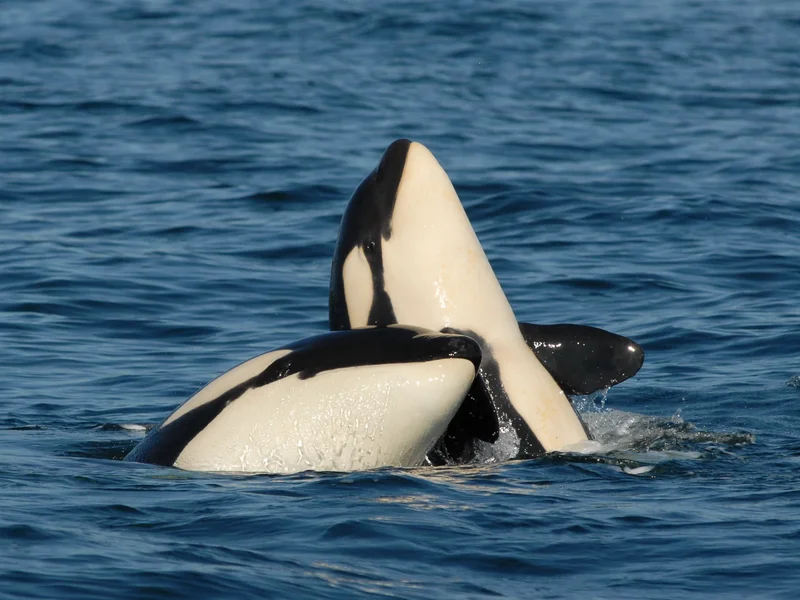
Twenty years ago, in the waters off the coast of Washington State and British Columbia, an adult female killer whale (dubbed K16 by those who know her well) gave birth to a son, K35.
"These two have an extremely close social relationship," says Michael Weiss, the research director at the Center for Whale Research in Friday Harbor, Washington.
It's hard for Weiss to think of a time when he didn't catch the pair hanging out in the same group, and often immediately next to each other.
"[They're] just this pair of whales that are basically each other's best friend," he said.
Male orcas are massive, and so are their appetites. They're also less maneuverable, which may make it harder for them to catch prey. All this means that a male like K35 needs help getting enough food.
So his mom will often dive down, says Weiss, "catch a salmon, and bring it up to the surface and actually bite half of the fish off and leave that half for her son. So she's sharing a huge amount of food."
And here's the striking thing — since K35 was born two decades ago, his mom has never had another calf. Contrast that with other females in the population.
"Killer whale mothers pay a really huge cost to take care of their sons," says Weiss. That cost is that they have fewer offspring. "And they do this throughout their son's life and never really stop paying that cost to keep their sons alive."
In fact, when a mom dies, her son usually perishes within a year or two. "We think that is largely because they're seeing a huge reduction in the amount of food they get," explains Weiss.
"That's how you keep a population of slow-breeding animals going," says Weiss. "So investing in sons for a population like ours that is so stressed is really not ideal."
Weiss worries that this maternal strategy, which served this population so well in the past, could raise their risk of extinction — that the kind of lifelong bonds he's seen between K16 and her son may tether these creatures to an uncertain fate.
